The One Place You Always Study Is Quietly Setting You Up to Fail
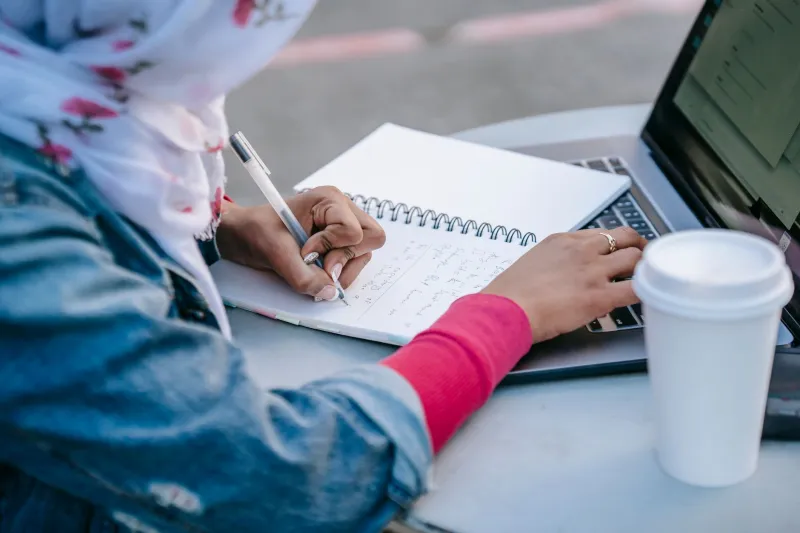
You've got your system dialed in. Same desk, same lamp, same playlist, same mug of coffee. It feels productive. It feels right. And honestly, that familiar setup probably does help you focus — at first.
But here's the part nobody tells you: that comfort might be quietly tanking your test scores.
The reason comes down to something called context-dependent memory, and once you understand it, you'll never look at your favorite study spot the same way again.
What Context-Dependent Memory Actually Means
Your brain doesn't store memories in a vacuum. Every time you learn something, your brain quietly tags that information with environmental cues — the lighting in the room, the background noise, the smell of the space, even how your chair feels. These tags become part of the memory itself.
So when you go to retrieve that information later, your brain works best when the surrounding environment matches the one where you originally learned it. Walk back into the same room, and those cues act like a search index — they help pull up what you studied. Change the environment, and suddenly the index doesn't quite match.
This isn't a theory. Researchers have been studying this effect for decades. One of the most famous early experiments had divers memorize word lists either underwater or on land. When they were tested, the divers who learned underwater recalled significantly more words when tested underwater — and the same held true for the land group. The environment itself was baked into the memory.
Now think about what happens to you. You study everything at your desk at home. Then you walk into a classroom or testing center — different lighting, different chairs, different ambient sounds, probably some low-key anxiety thrown in — and suddenly your brain is scrambling to retrieve information without any of the context cues it was trained on. That "tip of the tongue" feeling during an exam? Context mismatch might be a bigger reason for it than you think.
Why Your Favorite Spot Creates a False Sense of Mastery
Here's where it gets a little sneaky. When you study in the same place repeatedly, retrieval feels easy. You sit down, the cues kick in, and the information flows. You think, "I've got this."
But that ease isn't just because you've learned the material well — it's partly because you're in the exact environment where you encoded it. You're essentially giving yourself a cheat code that won't be available on test day.
This creates what some educators call an illusion of competence. You feel prepared because recall is smooth at your desk. Then you walk into the exam room and the smooth recall disappears, and you're left wondering why you blanked on stuff you knew last night.
Studying in varied locations forces your brain to build memory traces that are less dependent on any single set of environmental cues. The information becomes more flexible, more portable — exactly what you need when the test environment is out of your control.
The Research That Should Make You Rethink Your Routine
A study out of the University of Michigan (yes, the same university that's spent a lot of time thinking about how people learn) found that students who studied the same material in two different rooms performed significantly better on later tests than students who studied in the same room twice. Same total study time. Same material. Just different locations — and the results were meaningfully different.
The takeaway isn't that your bedroom is bad. It's that only your bedroom is the problem.
When you expose your brain to the same content across multiple environments, you're essentially decoupling the memory from any single context. The information becomes more robustly encoded because it has to survive retrieval across different cue sets. That's the kind of recall that holds up under pressure.
The Location-Rotation Strategy (Simple and Free)
You don't need to overhaul your entire study life. You just need to introduce some intentional variety. Here's a straightforward approach:
1. Identify 3–4 realistic study locations. Think about places you can actually get to without a ton of friction. Your bedroom desk, the kitchen table, a local library, a coffee shop, a campus lounge — whatever works for your schedule. You're not looking for perfect. You're looking for different.
2. Rotate by session, not by subject. Don't try to assign certain topics to certain places. The goal is to study the same material across different environments. Review your chemistry notes at home, then review them again at the library two days later. That double exposure in different contexts is what builds flexible recall.
3. Get at least one session in a test-like environment. If you know your exam is in a quiet, fluorescent-lit classroom, try to get one or two study sessions in a similar setting. Libraries are great for this. So is an empty classroom if you can access one. This doesn't replace varied-location studying — it supplements it.
4. Don't underestimate "different enough." You don't need radically different locations every single time. Studying at your kitchen table instead of your desk counts. Sitting outside counts. Even rearranging your room slightly can introduce enough novelty to nudge your brain out of pure context-dependence.
A Quick Word on Noise and Distractions
Some students avoid coffee shops or public spaces because they find them distracting. That's fair — and if a location genuinely tanks your ability to focus, it's not worth it. But a little ambient noise and mild distraction during some study sessions isn't necessarily a bad thing. Tests aren't silent either. Training your brain to retrieve information in slightly imperfect conditions can actually improve performance when the real stakes arrive.
The key is balance. Most of your studying can still happen in focused, quiet environments. You're just not doing all of it in one place anymore.
The Bigger Takeaway
The best study tricks aren't always about studying harder or longer. Sometimes they're about studying smarter in ways your brain actually responds to. Context-dependent memory is one of those things that operates completely below your conscious awareness — which means most students never think to address it.
But now you know it's happening. And that's the first step to using it in your favor instead of letting it work against you.
Next time you're tempted to settle into your usual spot for a third session in a row, grab your notes and go somewhere different. Your brain — and your test scores — will thank you for it.