Your Prettiest Notes Are Probably Your Worst Ones
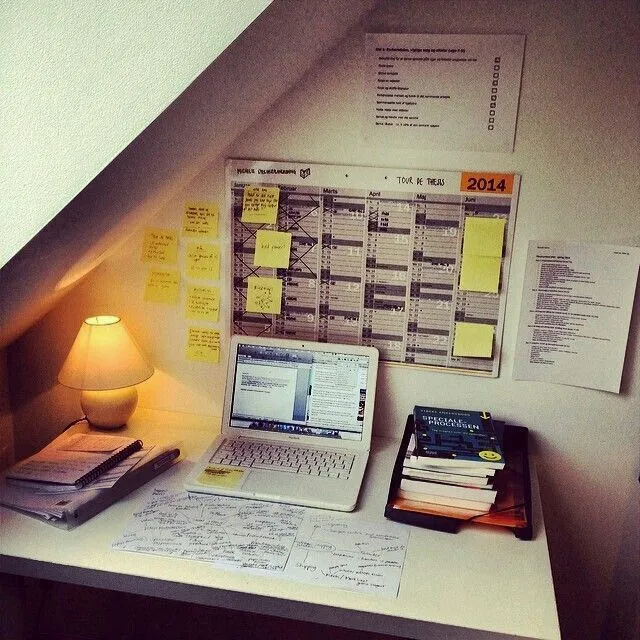
Let's be honest. There's a whole corner of the internet — TikTok, YouTube, Instagram — dedicated to gorgeous notes. Pastel highlighters, bullet points so uniform they look typeset, headers written in three different fonts. Students spend serious time on this stuff, and it looks like studying.
But here's the uncomfortable question nobody in that aesthetic community wants to answer: are those beautiful notes actually helping you learn anything?
Spoiler alert — for a lot of students, the answer is no.
The Transcription Trap
When you sit down in a lecture hall or a Zoom class and your main goal is producing clean, legible notes, your brain quietly shifts into secretary mode. You stop listening to understand and start listening to record. The focus moves from meaning to mechanics — spelling, spacing, whether your bullet points are aligned.
Cognitive psychologists call this passive processing. You're technically engaging with the material, but you're not doing the mental heavy lifting that actually builds memory. You're basically a human photocopier.
The research backs this up in some pretty striking ways. Studies on laptop note-takers versus longhand note-takers found that students who typed verbatim transcripts of lectures performed significantly worse on conceptual questions than students who were forced to summarize and paraphrase because they couldn't type fast enough. The constraint was the feature, not the bug. Struggling to keep up meant their brains had to make decisions about what mattered — and that decision-making is exactly where learning happens.
Neat handwriting creates a similar trap. When you slow down to make every letter look perfect, you can enter a kind of autopilot where your hand moves and your brain just... floats away.
Why Your Brain Loves the Illusion of Productivity
Here's what makes this especially sneaky: walking out of a lecture with four pages of immaculate notes feels amazing. It feels like evidence. You have something to show for the last 75 minutes. The notes are organized, they're complete, and they look authoritative.
But feeling productive and being productive are two very different things, and your brain is embarrassingly bad at telling them apart in the moment.
This is sometimes called the fluency illusion — when something feels smooth and easy, we interpret that as understanding. Neat notes feel smooth. They feel like mastery. But that smoothness is often a sign that no real cognitive work happened.
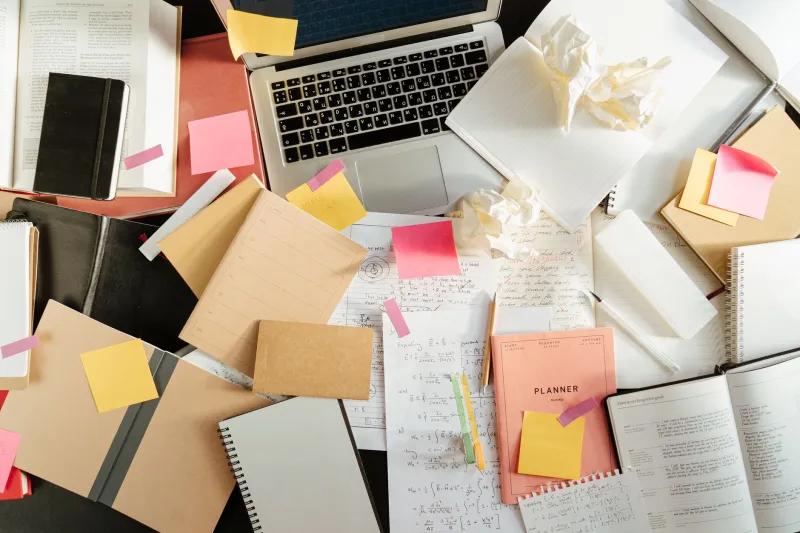
The students who leave class with slightly chaotic notes — half-sentences, arrows connecting ideas, question marks scattered everywhere — often feel like they underperformed. In reality, their brains were working significantly harder the entire time.
What 'Productive Messiness' Actually Looks Like
This isn't a permission slip to just stop trying. There's a difference between useful messiness and useless chaos. The goal isn't to make your notes unreadable — it's to make sure the process of taking them forces your brain to engage.
Here are a few ways to build that into your note-taking habit:
Summarize, don't transcribe. When a professor makes a point, resist the urge to write down exactly what they said. Instead, write what it means — in your own words, in as few words as possible. This one shift alone dramatically increases how much your brain processes the information in real time.
Leave intentional gaps. Instead of trying to capture everything, deliberately leave blank spaces where you know something was said but you're not sure you got it right. Those gaps become retrieval practice prompts when you review later. You'll try to fill them in from memory, which is one of the most powerful learning techniques that exists.
Use your own shorthand. Don't write 'the mitochondria produce ATP through oxidative phosphorylation.' Write 'mito → ATP, ox phos.' Abbreviating forces compression. Compression forces understanding. If you can't shorten something, you probably don't understand it well enough yet.
Draw connections visually, even badly. Circle two things and draw a line between them. Write 'why?' in the margin. Sketch a rough diagram even if it looks like a kindergartener drew it. These visual interruptions break the transcription autopilot and signal to your brain that it needs to think, not just record.
Ask questions in your notes. Not rhetorical ones — actual questions you genuinely don't know the answer to yet. 'Does this apply to X?' or 'Wait, how does this connect to what we covered last week?' Writing questions in real time keeps you mentally present in a way that passive recording never does.
The Review Problem
Here's another issue with perfect notes that doesn't get talked about enough: they're almost too easy to review.
When you flip back through four pages of beautifully organized information, your eyes glide over it. Everything is clear, everything is legible, everything looks familiar. And familiarity feels like knowledge — but it isn't.
Slightly messy notes, on the other hand, force you to slow down. You have to decode your own shorthand. You have to figure out what that arrow meant. You have to reconstruct the argument from partial sentences. All of that reconstruction is active retrieval, and active retrieval is what actually moves information from short-term to long-term memory.
In other words, notes that are slightly harder to read are often more valuable to study from — because studying them requires actual effort.
Finding Your Sweet Spot
None of this means you should abandon all structure. Completely chaotic notes with no organization are just as useless as notes that are so polished they required zero thought to produce. The goal is to find the middle ground — legible enough that you can actually use them later, but rough enough that creating them required your brain to make decisions.
A good test: if you could have taken your notes while doing something else on autopilot, they're probably too passive. If you had to actively choose what to write, how to phrase it, and what connected to what — you're in the right zone.
The prettiest notes in the room might belong to the student who learned the least. And the student with the scribbled, half-legible notebook? They might have actually been paying attention the whole time.